Fast, Accurate, Robust Quantum Chemistry
Q-Chem enables quick, accurate predictions of structure, reactivities, properties, spectra, and more for molecules and materials.
Fast, Robust Chemistry Simulations
Q-Chem enables quick, accurate predictions of structure, reactivities, properties, spectra, and more for molecules and materials.


Recent Publication Highlights
Q-Chem 7 is here! Read about the latest features, including new DFT functionals, numerical sparsity speedups, faster NMR, MRSF-TDDF, and more: https://t.co/eD8aArkboF
— Q-Chem (@QChemSoftware) July 7, 2026
Request a free, month-long demo of Q-Chem and QC-PBC, free of charge: https://t.co/qkB9eRD0wW#compchem pic.twitter.com/4lbq52PdzG
One of the things we're most excited about in Q-Chem 7 is QC-PBC: A new module that uses a GTO basis for modeling periodic systems. Highlights include fast hybrid DFT; CC and MP2; analytic derivatives; excited states; solvation; and EDA.
— Q-Chem (@QChemSoftware) June 22, 2026
Pre-order today: https://t.co/DavuMzy9eX pic.twitter.com/FXe6r1IUTK
Q-Chem developers published a new numerical sparsity approach to local correlation for MP2; it scales competitively with (sometimes better than!) DLPNO-MP2 and will be extended to double-hybrid #DFT in QC7, providing speedup and better accuracy. https://t.co/uuBxv1MehV pic.twitter.com/mP4SfO2fUZ
— Q-Chem (@QChemSoftware) April 10, 2026
QC-PBC Webinar | |
| QC-PBC, our new GPW-based package for modeling materials, was released alongside Q-Chem 7 last month! If you want to learn more about its new, unique features (including correlated methods, solvation, EDA, and more), join us for a webinar presented by developer Joonho Lee on September 24 at 11AM PST. Register here! |
M-Chem Webinar: Recording Available! | |
| Did you miss last week's webinar on M-Chem, our new biomolecular modeling package? Not to worry; the recording has now been posted on our YouTube channel. Watch it here. |
Q-Chem 7 Webinar | |

| Did you miss our recent webinar about Q-Chem 7 from Prof. Martin Head-Gordon? If so, don't worry; the recording is now available for viewing on our YouTube channel. Watch the full video here! This webinar covers the breadth of new features available in … Read More |
Q-Chem Newsletter: July 2026 | |
| Q-Chem News & EventsQ-Chem 7 Is Here! We are pleased to present our next major generational release, Q-Chem 7! It includes all of the performance and usability features you've come to expect from Q-Chem, along with a plethora of new features, including the COACH functional; linear-scaling MP2 and double-hybrid DFT; MPI-enabled NMR features; MRSF-TDDFT energies and properties; and much more! |
QC-PBC Webinar |
|
QC-PBC, our new GPW-based package for modeling materials, was released alongside Q-Chem 7 last month! If you want to learn more about its new, unique features (including correlated methods,… Read More |
Q-Chem 7 Webinar |

|
Did you miss our recent webinar about Q-Chem 7 from Prof. Martin Head-Gordon? If so, don't worry; the recording is now available for viewing on our YouTube channel.… Read More |
Q-Chem Newsletter: July 2026 |
|
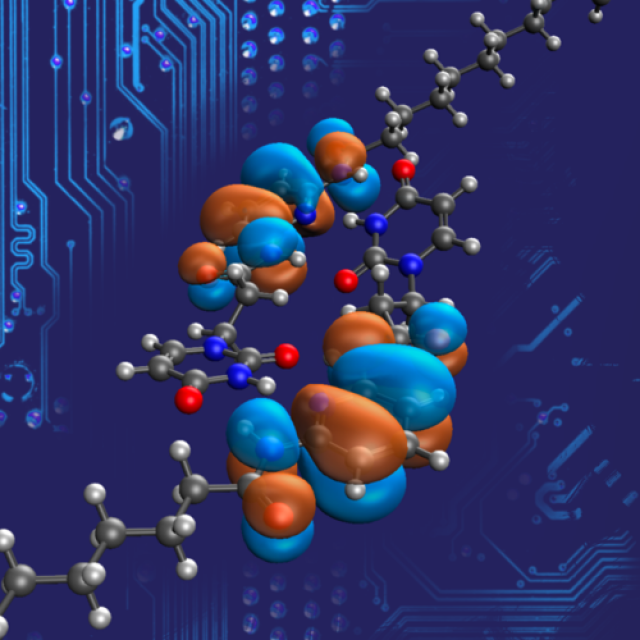
Q-Chem News & EventsQ-Chem 7 Is Here! We are pleased to present our next major generational release, Q-Chem 7! It includes all of the performance and… Read More |